
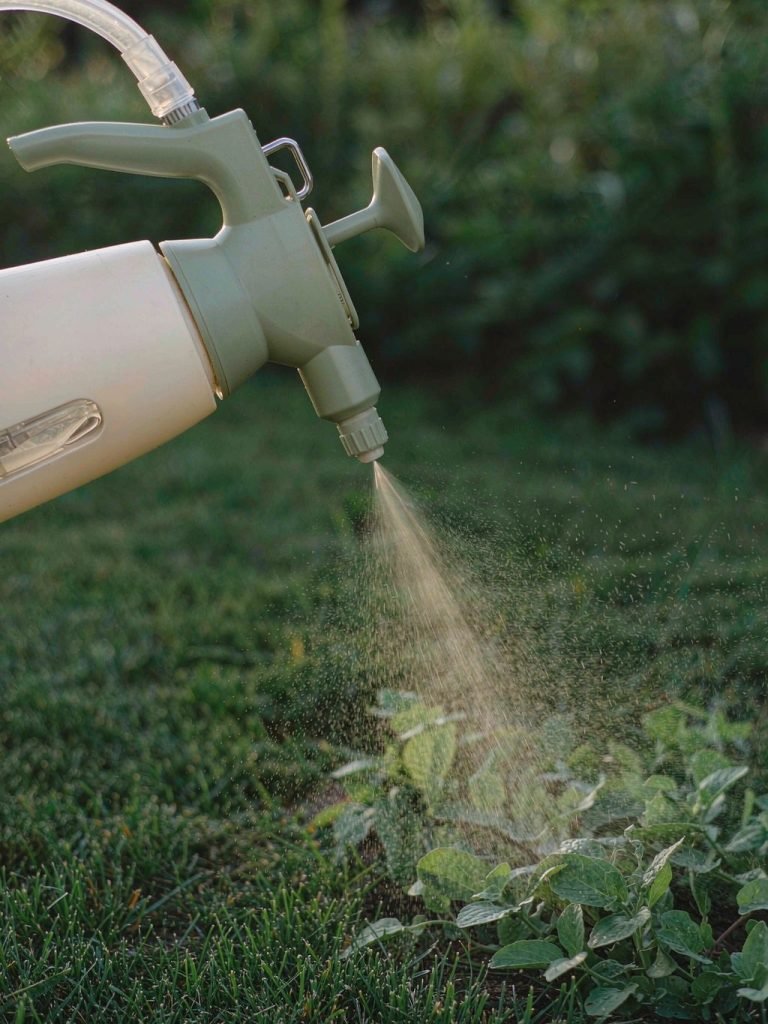
Post-emergent herbicides are contact or systemic products that kill weeds already growing. Their effectiveness depends less on the brand than on three variables: the size of the weed, the temperature, and whether the leaf surface is actually able to take up the product.
Size first
A young weed has thin cuticle, fast cell division and a small root system. A mature weed has a waxy leaf and a root that can regenerate. The label rates are usually written for weeds at the 2–4 leaf stage for exactly this reason.
For broadleaf weeds in turf, that means spraying when the plant is 5–10 cm across, not when it is flowering. For crabgrass, before it tillers. For thistle, at the rosette stage in autumn.
Temperature and uptake
Most herbicides work best between 60 and 85 °F (15–30 °C). Below that, the plant is not growing and does not translocate the active ingredient. Above 85 °F, the leaf may close its stomata and the product can volatilise — which also increases drift injury to neighbouring plants.
Spray in the morning when the dew has dried and the wind is under 5 mph. Avoid spraying before rain; most products need 6–24 hours of dry leaf surface.
Make the droplet stay
A waxy leaf sheds water. A surfactant reduces surface tension so the droplet spreads and stays in contact instead of beading off. Many products include one; if the label allows, add a non-ionic surfactant at the stated rate.
Do not mow for two or three days before or after spraying. A freshly cut leaf has less surface area and an open wound that bleeds the product out.
Spot-treat, do not blanket
- Spot spray individual weeds with a hand sprayer; it uses a fraction of the product and spares the grass.
- Protect desirable plants with a shield or cardboard while spraying near beds.
- Never spray on a windy day. Drift injury on tomatoes and roses is permanent.
- Clean the sprayer with a triple rinse; herbicide residue in a sprayer used later for insecticide can damage plants.
Why repeat applications are normal
Weed seeds germinate in flushes, not all at once. A spray in May kills what is up in May; the next flush appears in June. Two or three passes per season, timed to the flush and to small weed size, will do more than one heavy application at the wrong moment.
When not to spray
Do not treat drought-stressed or heat-stressed grass. Do not spray newly seeded lawn until it has been mowed three times. And do not use a post-emergent where the label restricts it to turf — the same product can kill the ground cover you were trying to keep.